
 ,
Tidiane Kamagate,
Abdoulaye Toure*,
Armel Fabrice Zoro,
Bazoumana Fofana,
Lessoy Yves Thierry Zoue
,
Tidiane Kamagate,
Abdoulaye Toure*,
Armel Fabrice Zoro,
Bazoumana Fofana,
Lessoy Yves Thierry Zoue
Kent and Brooks mango varieties are of major nutritional and economic importance to local populations. However, these fruits are highly susceptible to fermentation, leading to significant post-harvest losses. The objective of this study was to valorize sorting rejects of these mango varieties collected from two processing units in Korhogo (Côte d’Ivoire) through isolation of fermentative microorganisms from their pulps. After ripening, fermentative microorganisms (lactic acid bacteria and yeasts) were enumerated and characterized every three days over a nine-day period using specific culture media and standard microbiological techniques. Enumeration results revealed presence of lactic acid bacteria exclusively in Brooks variety, with microbial loads increasing up to day 6 (from 4.96 to 7.66 log CFU/g) before becoming undetectable from day 9 onwards. In contrast, yeasts were observed only in Kent variety, with a decrease in counts from day 0 to day 3 (from 4.97 to 3.57 log CFU/g), followed by complete disappearance by day 6. Furthermore, the characterization of the isolated fermentative microorganisms yielded a total of 45 lactic acid bacteria isolates and 30 yeast isolates from the pulps of Brooks and Kent mangoes, respectively. Characterization of lactic acid bacteria revealed 36 coccobacilli, 5 cocci, and 4 bacilli. Yeast isolates exhibited an oval morphology, with unipolar and multipolar budding observed as modes of reproduction. This study demonstrates that mango sorting rejects of Kent and Brooks varieties constitute a valuable source of fermentative microorganisms, including lactic acid bacteria and yeasts. The diversity and dynamics of these microorganisms during spontaneous fermentation highlight their potential for biotechnological applications, particularly in development of starter cultures. The isolation and characterization of these microorganisms provide a scientific basis for the valorization of mango sorting rejects, thereby contributing to the reduction of post-harvest.
| Published in | International Journal of Microbiology and Biotechnology (Volume 11, Issue 1) |
| DOI | 10.11648/j.ijmb.20261101.11 |
| Page(s) | 1-8 |
| Creative Commons |
This is an Open Access article, distributed under the terms of the Creative Commons Attribution 4.0 International License (http://creativecommons.org/licenses/by/4.0/), which permits unrestricted use, distribution and reproduction in any medium or format, provided the original work is properly cited. |
| Copyright |
Copyright © The Author(s), 2026. Published by Science Publishing Group |
Mangoes, Sorting Rejects, Yeasts, Lactic Acid Bacteria
MRS | Man Rogosa, Sharpe |
OGA | Oxytetracycline-Glucose-Yeast Extract Agar |
ISO | International Organization for Standardization |
AFNOR | French Association for Standardization |
N | Number of Microorganisms (CFU/g) |
ΣC | Sum of Colonies Counted on the Selected Petri Dishes at Two Consecutive Dilutions |
n1 | Number of Petri Dishes Retained at the First Dilution |
n2 | Number of Petri Dishes Retained at the Second Dilution |
d | Dilution Corresponding to First Countable Plates |
v | Volume of Inoculum Used |
CFU/g | Colony Forming Unit per Gram |
| [1] | Inter-mangue, Rapport annuel sur la production et la commercialisation de la mangue en Côte d’Ivoire [Annual Report on Mango Production and Marketing in Côte d’Ivoire]. Abidjan, Côte d’Ivoire. 2023, 42 P. |
| [2] | Djantou, N. E. B. Optimisation du broyage des mangues séchées (Manguifera indica var Kent): Influence sur les propriétés physicochimiques et fonctionnelles des poudres obtenues [Optimization of grinding of dried mangoes (mangifera indica var. kent): influence on the physicochemical and functional properties of the resulting powders]. PhD Thesis, national graduate school of agricultural sciences, 2006. |
| [3] | Desbordes, D. Qualite microbiologique des fruits et legumes, flores, alteration, risques sanitaires, prevention, Ed, Tour Europe, Paris DESS Ingénierie documentaire [Microbiological quality of fruits and vegetables: microflora, spoiage, health risks, prevention. tour europe publishing, paris dess in information engineering]. 2003, 45 P. |
| [4] | Blin, C. P. Etude comparative du catabolisme de l’acide ricinoleique chez les levures du genre sporidiobolus: mise en évidence et Caracterisation du systeme beta-oxydase implique [Comparative Study of Ricinoleic Acid Catabolism in Yeasts of the Genus Sporidiobolus: Evidence and Characterization of the Involved β-Oxidation System]. PhD Thesis, Burgundy University, 2002. |
| [5] | Yao, A. A., Egounlety, M., Kouame, L. P et Thonart, P. Les bacteries lactiques dans les aliments ou boissons amylaces et fermentes de l’Afrique de l’ouest/ leur utilisation actuelle [Lactic acid bacteria in starchy and fermented foods and beverages of west africa: their current uses]. Annals of Veterinary Medicine. 2009, 153, 54-65. |
| [6] | Saidi, Y. Biodiversite de la microflore lactique du lait cru de dromadaire et evaluation de ses caracteres technologiques [Diversity of lactic microflora in raw camel milk and assessment of its technological properties]. PhD Thesis, Oran 1 Ahmed Ben Bella University, 2020. |
| [7] | Fessard, A. Recherche de bacteries lactiques autochtones capables de mener la fermentation de fruits tropicaux avec une augmentation de l’activite antioxydante [Screening for indigenous lactic acid bacteria capable of fermenting tropical fruits with enhanced antioxidant activity]. PhD Thesis, La Reunion University, 2017. |
| [8] | Caplice, E., Fitzgerald, G. F. Food fermentations: Role of microorganisms in food production and preservation. International Journal of Food Microbiology. 1999, 50, 131-149. |
| [9] | N’guessan, K., Brou, K., Noemie, J., Casaregola, S., Koffi, M. Identification of yeasts during alcoholic fermentation of tchapalo, a traditional sorghum beer from Côte d’Ivoire. 2011, 99(4), 855-64. |
| [10] | Ardhana, M., Fleet, G. H. The microbial ecology of cocoa bean fermentations in Indonesia. International Journal of Food Microbiology. 2003, 86, 87-99. |
| [11] | Bosson, A. J. C., Toure, A., Zoro, A. F., Landry, K. A C., Coulibaly, A., Zoue, L Y. T. Evaluation of physicochemical, nutritional and antioxidant parameters of pulp during post-harvest ripening of Kent variety, mango from Northern Côte d’Ivoire. Journal of Food and Nutrition Research. 2022, 10(6), 386-391. |
| [12] | Djeni, N. T., Toka, D. M., Kouame, K. A., Dje, K. M. Quality of attieKe (a Fermented Cassava Product) from the Three Main Processing Zones in Cote d’Ivoire. Food Research International. 2011, 44, 410-416. |
| [13] | Guiraud, J. P., 1998. Microbiologie alimentaire. Edition Dunod. Paris. P 116-117, 163, 209, 615. |
| [14] | Chafai, R., Menidjel, C., Kebbabi, R. Effet de l’addition de quelques plantes medicinales et epices sur la qualite organoleptiques, bacteriologiques et la duree de conservation du fromage traditionnel du lait d’une vache de race locale et de races ameliorees [Effect of adding selected medicinal plants and spices on the organoleptic and microbiological quality and shelf life of traditional cheese made from local and improved breed cow milk]. Master, Guelma University, 2024. |
| [15] | Garcia, C., Guerin, M., Souidi, K., Remize, F. Lactic Fermented Fruit or Vegetable Juices: Past, Present and Future. Beverages. 2020, 6(8), 31. |
| [16] | Quintana, S. E., Salas, S., García-Zapateiro, L. A., Bioactive compounds of mango (Mangifera indica): a review of extraction technologies and chemical constituents. J Sci Food Agric. 2021, 101(15), 61866192. |
| [17] | Tamang, J. P, Watanabe, K., Holzapfel, W. H. Review: Diversity of Microorganisms in Global Fermented Foods and Beverages. Front Microbiol. 2016, 7-377. |
| [18] | Marco, M. L., Sanders, M. E., Gänzle, M., Arrieta, M. C., Cotter, P. D., Vuyst, L. D., Hill, C., Holzapfel, W., Lebeer, S., Merenstein, D., Reid, G., Wolfe, B. E., Hutkins, R., The international scientific association for probiotics and prebiotics (ISAPP) consensus statement on fermented foods. Nat Rev Gastroenterol Hepatol. 2021, 18(3), 196-208. |
| [19] | Kamonou, D. K. Impact de differents supports de fermentation sur les parametres physico-chimique et microbiologique des feves de cacao (Theobroma cacao L.) dans la region du Haut Sassandra (Côte d’Ivoire) [impact of different fermentation substrates on the physicochemical and microbiological parameters of cocoa beans (Theobroma cacao L.) in the haut sassandra region (côte d’ivoire)]. Master, Jean Lorougnon Guede University, 2022. |
| [20] | Johansen, P. G., Owusu-Kwarteng, J., Parkouda, C., Padonou, S. W., Jespersen, L. Occurrence and Importance of Yeasts in Indigenous Fermented Food and Beverages Produced in Sub-Saharan Africa. Front Microbiol. 2019, 10, 1789. |
| [21] | Elechi, J. O. G., Oboh, E. J., Sampson, E. A, Nwiyi, I. U., Cornelius, A. S. Assessment of Microbial Safety of Bread Production Process in Some Selected Bakeries in Lafia Metropolis, Nasarawa State, Nigeria. International Journal of Scientific Research in Research Paper. Biological Science. 2022, 9(1), 01-10. |
| [22] | Dorta, E, González, M, Lobo, M. G, Laich, F. Antifungal activity of mango peel and seed extracts against clinically pathogenic and food spoilage yeasts. Natural Product Research. 2016, 30(22), 2598-2604. |
| [23] | Tirado-Kulieva, V., Atoche-Dioses, S., Hernández-Martínez, E. Phenolic compounds of mango (Mangifera indica) by-products: Antioxidant and antimicrobial potential, use in disease prevention and food industry, methods of extraction and microencapsulation. Scientia Agropecuaria. 2021. 12(2), 283-293. |
| [24] | Li, W., Wu, Q., Kwok, L., Zhang, H. Population and functional genomics of lactic acid bacteria, an important group of food microorganism: Current knowledge, challenges, and perspectives. Food Frontiers. 2023, 5(1), 1-21. |
| [25] | Tamang, J. P, Cotter, P. D., Endo, A, Han, N. S, Kort, R, Hutkins, R. Fermented foods in a global age: East meets West. Comprehensive Reviews in Food Science and Food Safety. 2020, 19, 184-217. |
| [26] | Shah, N. N., Singhal, R. S. Fermented fruits and vegetables. Current Developments in Biotechnology and Bioengineering. 2017, 45-89. |
| [27] | Kurtzman, C. P., Fell, J. W., Boekhout, T., Robert, V. Methods for Isolation, Phenotypic Characterization and Maintenance of Yeast. In The Yeasts, a Taxanomy, 5th Edition Elsevier, Kurtzman, C. P., Fell, J. W and Teun, B: Amsterdam, 2011, pp. 87-110. |
| [28] | Chanprasartsuk, O., Prakitchaiwattana, C., Sanguandeekul, R. Autochthonous yeasts associated with mature pineapple fruits, freshly crushed juice and their ferments; and the chemical changes during natural fermentation. Bioresource Technology. 2010, 101(19), 7500-9. |
APA Style
Traore, S., Kamagate, T., Toure, A., Zoro, A. F., Fofana, B., et al. (2026). Isolation and Characterization of Yeasts and Lactic Acid Bacteria from Spontaneously Fermenting Pulp of Sorting Rejects of Kent and Brooks Mango Varieties. International Journal of Microbiology and Biotechnology, 11(1), 1-8. https://doi.org/10.11648/j.ijmb.20261101.11
ACS Style
Traore, S.; Kamagate, T.; Toure, A.; Zoro, A. F.; Fofana, B., et al. Isolation and Characterization of Yeasts and Lactic Acid Bacteria from Spontaneously Fermenting Pulp of Sorting Rejects of Kent and Brooks Mango Varieties. Int. J. Microbiol. Biotechnol. 2026, 11(1), 1-8. doi: 10.11648/j.ijmb.20261101.11
AMA Style
Traore S, Kamagate T, Toure A, Zoro AF, Fofana B, et al. Isolation and Characterization of Yeasts and Lactic Acid Bacteria from Spontaneously Fermenting Pulp of Sorting Rejects of Kent and Brooks Mango Varieties. Int J Microbiol Biotechnol. 2026;11(1):1-8. doi: 10.11648/j.ijmb.20261101.11
@article{10.11648/j.ijmb.20261101.11,
  author = {Safiatou Traore and Tidiane Kamagate and Abdoulaye Toure and Armel Fabrice Zoro and Bazoumana Fofana and Lessoy Yves Thierry Zoue},
  title = {Isolation and Characterization of Yeasts and Lactic Acid Bacteria from Spontaneously Fermenting Pulp of Sorting Rejects of Kent and Brooks Mango Varieties},
  journal = {International Journal of Microbiology and Biotechnology},
  volume = {11},
  number = {1},
  pages = {1-8},
  doi = {10.11648/j.ijmb.20261101.11},
  url = {https://doi.org/10.11648/j.ijmb.20261101.11},
  eprint = {https://article.sciencepublishinggroup.com/pdf/10.11648.j.ijmb.20261101.11},
  abstract = {Kent and Brooks mango varieties are of major nutritional and economic importance to local populations. However, these fruits are highly susceptible to fermentation, leading to significant post-harvest losses. The objective of this study was to valorize sorting rejects of these mango varieties collected from two processing units in Korhogo (Côte d’Ivoire) through isolation of fermentative microorganisms from their pulps. After ripening, fermentative microorganisms (lactic acid bacteria and yeasts) were enumerated and characterized every three days over a nine-day period using specific culture media and standard microbiological techniques. Enumeration results revealed presence of lactic acid bacteria exclusively in Brooks variety, with microbial loads increasing up to day 6 (from 4.96 to 7.66 log CFU/g) before becoming undetectable from day 9 onwards. In contrast, yeasts were observed only in Kent variety, with a decrease in counts from day 0 to day 3 (from 4.97 to 3.57 log CFU/g), followed by complete disappearance by day 6. Furthermore, the characterization of the isolated fermentative microorganisms yielded a total of 45 lactic acid bacteria isolates and 30 yeast isolates from the pulps of Brooks and Kent mangoes, respectively. Characterization of lactic acid bacteria revealed 36 coccobacilli, 5 cocci, and 4 bacilli. Yeast isolates exhibited an oval morphology, with unipolar and multipolar budding observed as modes of reproduction. This study demonstrates that mango sorting rejects of Kent and Brooks varieties constitute a valuable source of fermentative microorganisms, including lactic acid bacteria and yeasts. The diversity and dynamics of these microorganisms during spontaneous fermentation highlight their potential for biotechnological applications, particularly in development of starter cultures. The isolation and characterization of these microorganisms provide a scientific basis for the valorization of mango sorting rejects, thereby contributing to the reduction of post-harvest.},
 year = {2026}
}
TY  - JOUR
T1  - Isolation and Characterization of Yeasts and Lactic Acid Bacteria from Spontaneously Fermenting Pulp of Sorting Rejects of Kent and Brooks Mango Varieties
AU  - Safiatou Traore
AU  - Tidiane Kamagate
AU  - Abdoulaye Toure
AU  - Armel Fabrice Zoro
AU  - Bazoumana Fofana
AU  - Lessoy Yves Thierry Zoue
Y1  - 2026/02/04
PY  - 2026
N1  - https://doi.org/10.11648/j.ijmb.20261101.11
DO  - 10.11648/j.ijmb.20261101.11
T2  - International Journal of Microbiology and Biotechnology
JF  - International Journal of Microbiology and Biotechnology
JO  - International Journal of Microbiology and Biotechnology
SP  - 1
EP  - 8
PB  - Science Publishing Group
SN  - 2578-9686
UR  - https://doi.org/10.11648/j.ijmb.20261101.11
AB  - Kent and Brooks mango varieties are of major nutritional and economic importance to local populations. However, these fruits are highly susceptible to fermentation, leading to significant post-harvest losses. The objective of this study was to valorize sorting rejects of these mango varieties collected from two processing units in Korhogo (Côte d’Ivoire) through isolation of fermentative microorganisms from their pulps. After ripening, fermentative microorganisms (lactic acid bacteria and yeasts) were enumerated and characterized every three days over a nine-day period using specific culture media and standard microbiological techniques. Enumeration results revealed presence of lactic acid bacteria exclusively in Brooks variety, with microbial loads increasing up to day 6 (from 4.96 to 7.66 log CFU/g) before becoming undetectable from day 9 onwards. In contrast, yeasts were observed only in Kent variety, with a decrease in counts from day 0 to day 3 (from 4.97 to 3.57 log CFU/g), followed by complete disappearance by day 6. Furthermore, the characterization of the isolated fermentative microorganisms yielded a total of 45 lactic acid bacteria isolates and 30 yeast isolates from the pulps of Brooks and Kent mangoes, respectively. Characterization of lactic acid bacteria revealed 36 coccobacilli, 5 cocci, and 4 bacilli. Yeast isolates exhibited an oval morphology, with unipolar and multipolar budding observed as modes of reproduction. This study demonstrates that mango sorting rejects of Kent and Brooks varieties constitute a valuable source of fermentative microorganisms, including lactic acid bacteria and yeasts. The diversity and dynamics of these microorganisms during spontaneous fermentation highlight their potential for biotechnological applications, particularly in development of starter cultures. The isolation and characterization of these microorganisms provide a scientific basis for the valorization of mango sorting rejects, thereby contributing to the reduction of post-harvest.
VL  - 11
IS  - 1
ER  -
Laboratory of Biotechnology and Valorization of Agroresources and Natural Substances, Peleforo Gon Coulibaly University, Korhogo, Côte d’Ivoire
Biography: Safiatou Traore holds a Master’s degree in Microbiology and Quality of Agro and Bio-industries from Peleforo GON COULIBALY University (Korhogo, Côte d’Ivoire, in 2020). Since 2021, she has been a doctoral student in the field of Biotechnology and Valorization of Agroresources, with a specialization in Biochemistry and Microbiology at Peleforo GON COULIBALY University. She is involved in research at the University, particularly in the fields of Biotechnology and the Development of Agroresources and Natural Substances, such as the transformation and valorization of mango.

Laboratory of Biotechnology and Valorization of Agroresources and Natural Substances, Peleforo Gon Coulibaly University, Korhogo, Côte d’Ivoire

Laboratory of Biotechnology and Valorization of Agroresources and Natural Substances, Peleforo Gon Coulibaly University, Korhogo, Côte d’Ivoire;Laboratory Biochimistry and Pharmacodynamy, Felix Houphouet-Boigny University, Abidjan, Côte d’Ivoire
Biography: Abdoulaye Toure is Doctor of Biochemistry and Microbiology in field of Biotechnology and Pharmacology of Natural Substances from Felix Houphouët-Boigny University (Abidjan, Côte d’Ivoire) in 2013. Otherwise, I’m a Certified Professor of Food Engineering from National Pedagogical Institute for Technical and Professional Education in Cocody (Abidjan, Côte d’Ivoire) in 2004. Since 2013, I’m currently Teacher and Researcher at Training and Research Unit of Biological Sciences at Peleforo GON COULIBALY University (Korhogo, Côte d'Ivoire). I’m involved in various research work in university particularly in fields of Naturel Substances Pharmacology, Biotechnology and Engineering of Foods and Agro-resources such as mango, cashew, vegetables, cow’s milk, tropical flours. I’m a member of Ivorian Association of Agronomic Sciences since 2017.
Laboratory of Biotechnology and Valorization of Agroresources and Natural Substances, Peleforo Gon Coulibaly University, Korhogo, Côte d’Ivoire;Laboratory of Biotechnology, Felix Houphouet-Boigny University, Abidjan, Côte d’Ivoire
Biography: Armel Fabrice Zoro is Doctor in Biotechnology, Bioressources and Biosecurities in field of Food Biotechnology from Félix Houphouët-Boigny University (Abidjan, Ivory Coast) in 2016. Otherwise, he is a Certified Professor of Food Engineering from National Pedagogical Institute for Technical and Professional Education in Cocody (Abidjan, Ivory Coast) in 2004. Since 2019, he is currently Researcher at the Training and Research Unit of Biological Sciences at Peleforo Gon Coulibaly University (Korhogo, Côte d'Ivoire). He is involved in various research work in the University particularly in fields of Biotechnology and Engineering of Foods and Agro-resources such as mango, cashew, oil of palm fruits, leafy vegetables, cow’s milk, baobab and nere flours.

Laboratory of Biotechnology and Valorization of Agroresources and Natural Substances, Peleforo Gon Coulibaly University, Korhogo, Côte d’Ivoire
Laboratory of Biotechnology, Felix Houphouet-Boigny University, Abidjan, Côte d’Ivoire
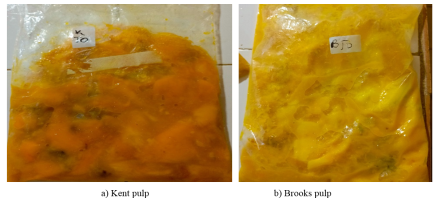
Figure 1.
Pulps from mango sorting rejects.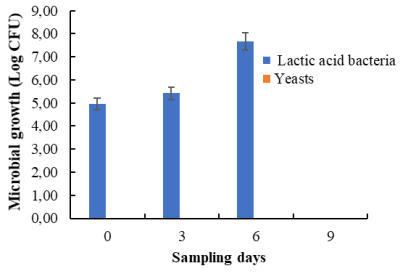
Figure 2. Lactic acid bacteria count in Brooks mango variety.
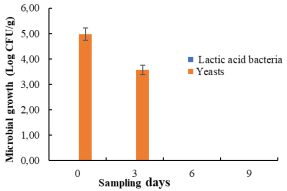
Figure 3. Yeast counts in Kent mango variety.
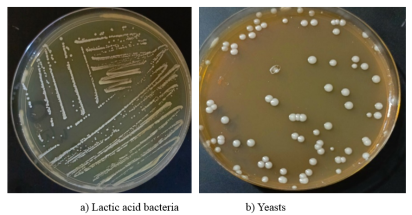
Figure 4. Macroscopic appearance of isolated fermentative microorganisms.
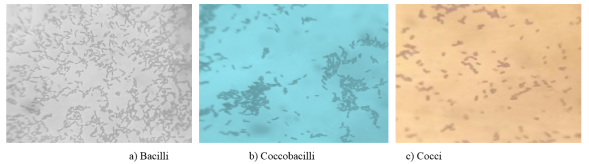
Figure 5. Morphological characteristics of lactic acid bacteria isolates from Brooks mango.
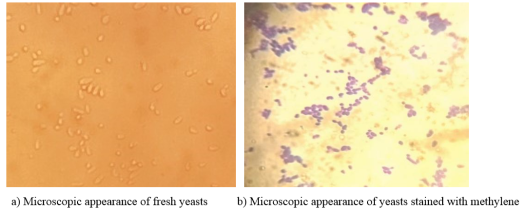
Figure 6. Morphological characteristics of yeast isolates from Kent mango pulp.



 Share This Article
 Twitter
 Linked In
 Facebook
 Copy
Copy Download